Don't have proof yet? Click here to obtain what you need!
Navigating the aftermath of infidelity is one of the most painful and disorienting experiences a person can go through. When the foundation of trust is shattered, your mind is likely racing with a million questions.
Best Cheater Apps to Catch Cheating on Phone
While it is entirely normal to want to know everything, not all questions are productive. Asking for highly graphic or intimate details (often called "pain shopping") can cause further trauma and create images that are impossible to unsee. Instead, your questions should focus on establishing the truth, understanding the boundaries that were crossed, and determining if there is a path forward—whether together or apart.
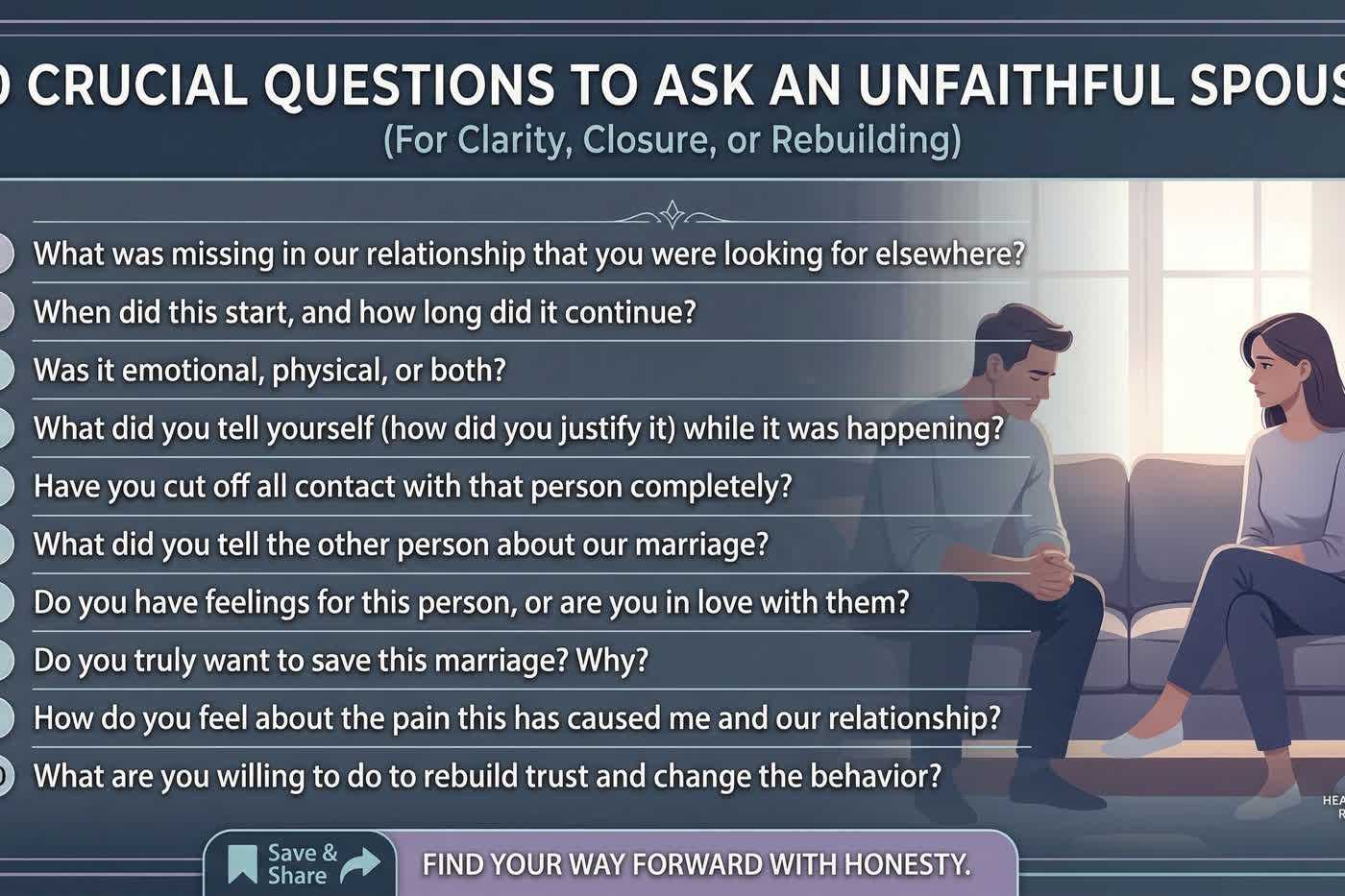
Here are 10 vital, grounding questions to ask an unfaithful spouse to help you find clarity.
Don't have proof yet? Click here to obtain what you need!
Before you can process the emotional weight of the betrayal, you need to understand the reality of the situation you are dealing with.
1. When did it start, and exactly how long did it last? You need a clear timeline. Knowing whether this was a fleeting, one-night mistake or a calculated, months-long deception is crucial for understanding the extent of the betrayal and the lies you were told along the way.
2. Was this strictly physical, or was there an emotional connection? Understanding the nature of the affair helps you understand what you are competing against or what boundary was breached. An emotional affair can sometimes be harder to heal from than a purely physical one, and vice versa.
3. Have you exposed me to any physical health risks? This is a non-negotiable question grounded purely in your personal safety. You need a direct, honest answer about whether they practiced safe sex so you can immediately schedule an STD screening for yourself.
4. Who else knows about this? Affairs thrive in secrecy, but often, the unfaithful spouse has a confidant, or the affair partner's friends might know. You need to know if you are walking into social situations where others knew about the betrayal before you did.
Don't have proof yet? Click here to obtain what you need!
Note: Asking these questions is not about taking the blame for their choices. The choice to cheat is entirely theirs. These questions are about understanding their mindset and vulnerabilities.
5. What did you tell yourself to justify this while it was happening? This question reveals a lot about their character and how they compartmentalize. Did they convince themselves your marriage was over? Did they tell themselves it didn't mean anything? Understanding their rationalization helps you see how broken their internal boundaries are.
6. What were you seeking or getting out of this affair? Were they looking for an ego boost, an escape from stress, a thrill, or an emotional connection? Knowing what void they were trying to fill can help determine if those issues can ever be resolved in a healthy way.
7. Did you ever feel guilty or try to stop before you were caught? This is a strong indicator of remorse. Someone who repeatedly tried to end the affair but struggled with boundaries is in a different mental space than someone who comfortably maintained a double life without a second thought until they were exposed.
8. Did you discuss me, or our marriage, with them? This addresses a deep layer of betrayal. Knowing whether your private marital struggles or your personal life were used as bonding material with the affair partner is important for understanding the depth of disrespect.
Don't have proof yet? Click here to obtain what you need!
If you are considering attempting to save the marriage, you need to assess their willingness to do the heavy lifting required for reconciliation.
9. Are you willing to completely sever all contact with this person immediately? This is the baseline requirement for reconciliation. If they work with the affair partner, are they willing to change jobs? If they hesitate or try to negotiate keeping the person in their life as a "friend," reconciliation is impossible.
10. What are you willing to do to help me heal and rebuild my trust? Rebuilding trust is an exhausting, years-long process. You need to know if they are willing to go to individual therapy, attend couples counseling, give you full access to their devices, and answer your questions patiently for as long as it takes.
Don't have proof yet? Click here to obtain what you need!
Set a time limit: These conversations are emotionally draining. Agree to talk for an hour, then take a break.
Write down their answers: Trauma affects memory. Taking notes can help you process their answers later when the adrenaline wears off.
Seek professional help: A trained couples counselor specializing in infidelity can provide a safe space to ask these questions without the conversation spiraling into a screaming match.
Don't have proof yet? Click here to obtain what you need!