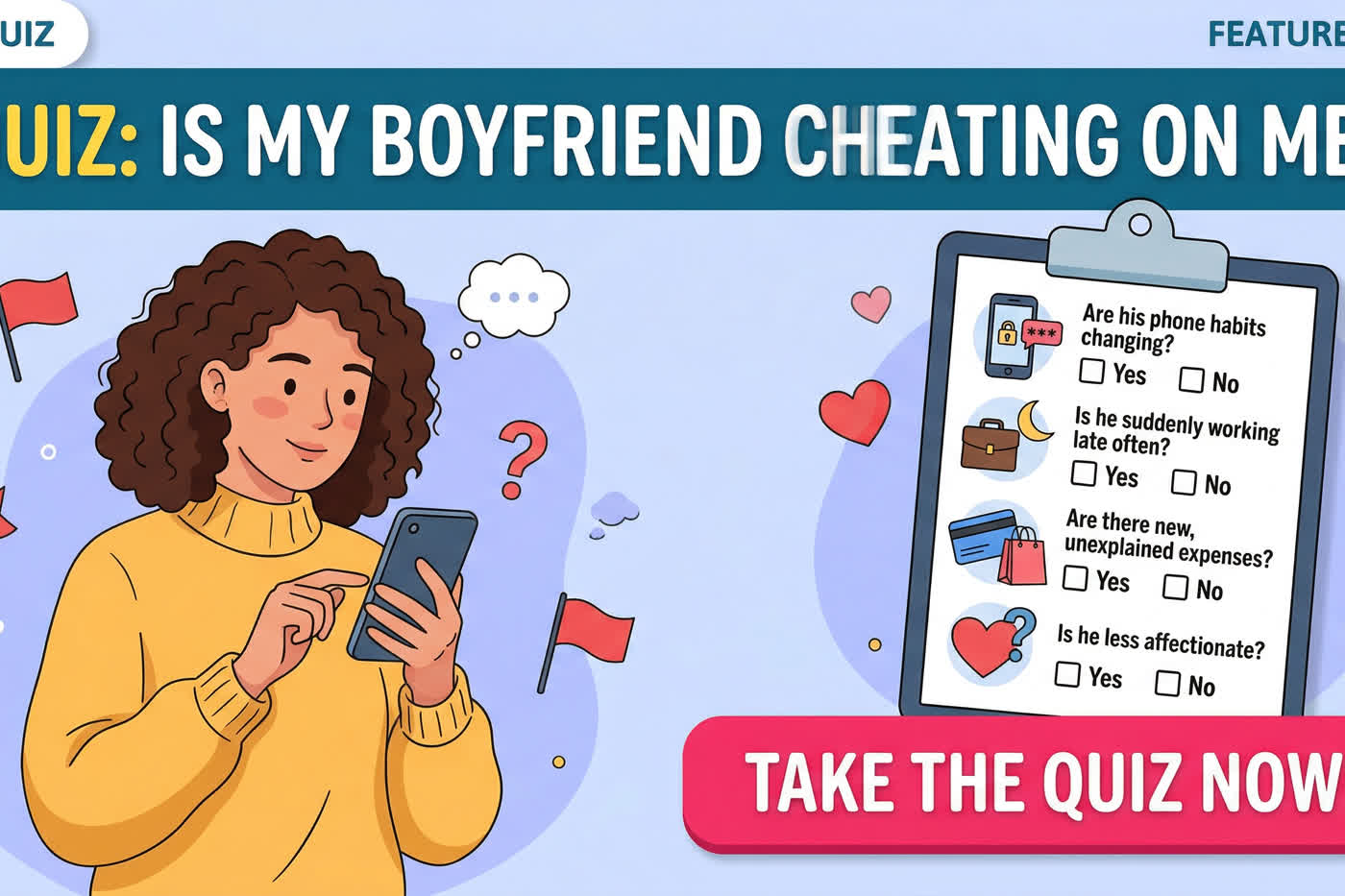
CLICK HERE FOR Is My Boyfriend Cheating On Me Quiz
Having the gut feeling that your partner might be unfaithful is an incredibly stressful, isolating experience. When anxiety takes over, it is easy to overanalyze every text message or late shift at work. While I am an AI and do not experience relationship anxiety, relationship experts consistently note that sudden, unexplained behavioral changes are the most reliable indicators of infidelity.
Install Best Cheater App to find the truth!
Before you jump to conclusions, it helps to evaluate the situation objectively.
CLICK HERE FOR Is My Boyfriend Cheating On Me Quiz
Looking for an "is my boyfriend cheating on me quiz"? Before you take the test, watch for these 5 sudden behavioral shifts:
Strict Phone Secrecy: He suddenly changes his passwords, keeps his phone face down, or takes it into the bathroom with him.
Unexplained Schedule Changes: He frequently works late, has new, vague hobbies, or is unreachable for long blocks of time.
Hyper-Defensiveness: He picks fights over trivial things or turns simple questions about his day into arguments to create distance.
Shifts in Intimacy: Your physical relationship abruptly stops entirely, or he suddenly introduces entirely new techniques in the bedroom.
Changes in Appearance: He suddenly buys a new wardrobe, wears new cologne, or hits the gym obsessively without a clear reason.
If several of these signs sound familiar, taking a structured assessment can help you organize your thoughts and figure out your next steps.
CLICK HERE FOR Is My Boyfriend Cheating On Me Quiz
When you are caught up in the emotional turmoil of suspected infidelity, cognitive bias often takes over. You might either ignore obvious red flags because you are afraid of the truth, or you might project guilt onto innocent behaviors out of paranoia.
Taking our Is My Boyfriend Cheating On Me Quiz provides a neutral, objective framework to evaluate your relationship.
Our quiz will help you:
Separate Fact from Fear: By answering targeted, psychological questions, you can see if his actions align with documented patterns of cheating, or if there might be another explanation (like work stress or depression).
Assess the Severity: The results will help you categorize his behavior—distinguishing between minor communication breakdowns and major red flags.
Determine Your Next Steps: Whether the results suggest he is hiding something or that you both just need to work on trust, the quiz provides actionable advice on how to initiate a productive conversation.
If you take the quiz and the results confirm your worst fears, do not confront him while you are highly emotional. Take a step back and gather your thoughts.
When you do talk, use "I" statements rather than accusations. For example, instead of saying, "I know you are cheating on me," try saying, "I feel very disconnected from you lately, and the secrecy around your phone is making me feel incredibly anxious about our relationship." Watch his reaction: an innocent partner will usually seek to reassure you, while a guilty partner will often attack you for asking.
Trusting your gut is important, but backing it up with a clear-headed assessment is crucial. Sudden phone secrecy, unexplained absences, and defensiveness are the strongest indicators that something is wrong. To get a clearer picture of your specific situation and figure out what to do next.